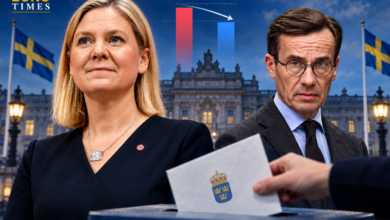
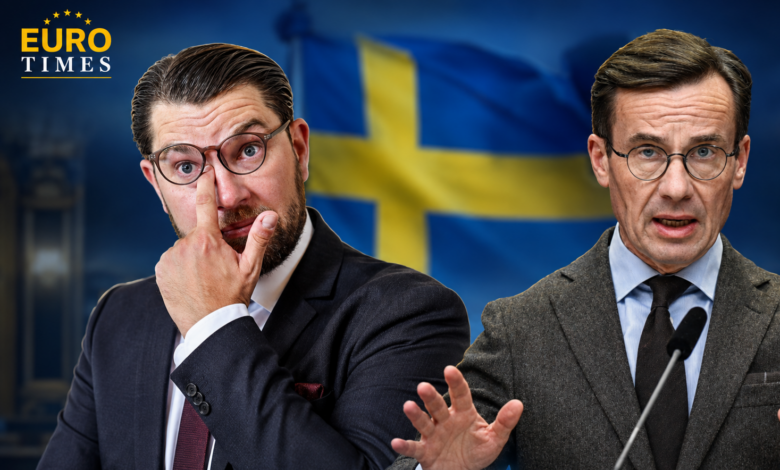
Sweden Democrats emerge as election’s biggest losers, shedding 11 seats and falling to third place

Euro Times / Dr. Ali Aljabiri
The Sweden Democrats (SD) are heading for one of their biggest electoral setbacks since entering parliament, with preliminary results from Sweden’s 2026 election indicating that the party could lose around 11 seats compared with 2022 and fall from being the country’s second-largest party to third place.
The setback goes beyond the number of seats. According to Reuters, the 2026 election is on course to become the first parliamentary election in which SD’s share of the vote has declined since it entered the Riksdag in 2010, breaking a long period of electoral growth that culminated in the party becoming Sweden’s second-largest parliamentary force in 2022.
From second to third place
In the 2022 election, the Sweden Democrats achieved their best result ever, winning 20.5% of the vote and 73 seats. They overtook the Moderates and became the second-largest party in parliament after the Social Democrats.
The picture has changed in 2026. The Moderates are heading towards reclaiming second place, while SD falls to third — a politically significant shift within the right-wing bloc itself.
The price of four years of influence over the Tidö government
The loss is particularly significant because the 2026 election followed the first parliamentary term in which the Sweden Democrats became a central part of the governing majority, despite not holding ministerial posts.
After the 2022 election, SD was the largest party in the right-wing bloc by seats and, together with the Moderates, Christian Democrats and Liberals, formed the basis of the Tidö Agreement that enabled Ulf Kristersson to form a government.
During the past four years, the party’s influence has been particularly visible on migration, crime and integration, where government policy became substantially tougher. Ahead of Sunday’s election, Kristersson also opened the door to the Sweden Democrats formally joining a future government if the right-wing bloc won.
End of a rise that began in 2010?
Since entering parliament for the first time in 2010, the Sweden Democrats had made gains in successive parliamentary elections, transforming themselves within 12 years from a small party into Sweden’s second-largest political force.
The preliminary 2026 result points to a break in that trajectory for the first time: SD is losing vote share, seats and its position in the parliamentary ranking at the same time.
Moderates reclaim second place
The setback becomes even clearer when compared with the Moderates. In 2022, the Moderates lost second place to SD; now they are heading towards reclaiming it, restoring Ulf Kristersson’s party as the largest force within the right-wing bloc.
The shift matters because the relative size of the two parties was directly linked to the debate over who should lead the right and who could claim the most influential ministerial posts in a future government.
A double defeat if the Tidö bloc loses power
The political blow could become even greater if the opposition’s lead is confirmed in the final result. In that case, SD would not only have lost seats and second place, but its bloc would also have lost power after four years of direct influence over government policy.
The figures remain preliminary. Final counting is continuing at the county administrative boards, and Sweden is still awaiting completion of all stages of the count before the election result is formally established.
But the political direction is already clear: the party that was the standout winner on the Swedish right in 2022 is emerging from the 2026 election as one of its biggest losers, with declines in votes, seats and parliamentary standing.