From Assembly to Manufacturing: New Evidence of Houthi Ambitions to Produce Advanced Ballistic Missiles in Yemen

The question of Houthi armament is no longer confined to how finished missiles reach Yemen. Recent field research by Conflict Armament Research describes shipments containing custom-made missile components, raw materials and testing equipment, pointing to an effort to expand the group’s capacity to manufacture parts and assemble advanced ballistic missiles inside Yemen.
Euro Times | In-depth analysis | October 29, 2026
The question of Houthi armament is no longer confined to how finished missiles reach Yemen. Recent field research by Conflict Armament Research describes shipments containing custom-made missile components, raw materials and testing equipment, pointing to an effort to expand the group’s capacity to manufacture parts and assemble advanced ballistic missiles inside Yemen.
What the four containers revealed
Conflict Armament Research documented materials discovered in four shipping containers in Aden, including specialized structural components for missile systems, raw materials used to produce and finish advanced parts, and tools and testing equipment. Shipping paperwork identified a Chinese supplier for some items. Naming a supplier does not establish that Chinese authorities knew of or approved the intended use; the study also does not claim that every item was made in China.
From imported systems to a production capability
CAR concluded that the Houthis appear to be pursuing production of parts for advanced medium-range ballistic missiles, including components associated with the Kheibar Shekan family, whose range exceeds 1,000 kilometers. Such specialized parts require exact engineering specifications, raising the possibility that the group obtained technical drawings or detailed design information through partners or procurement networks.
What can actually be made locally?
The findings suggest the potential to assemble missile bodies and motors, apply heat-resistant materials, integrate systems and conduct tests. These are meaningful industrial steps, but they do not amount to a fully domestic production cycle covering advanced materials, electronics and guidance systems. CAR emphasized that the actual extent of the manufacturing capability remains unclear.
Supply networks with more than one route
In separate research, CAR documented more than 800 missile and drone components seized in maritime operations in the Red Sea during 2024 and 2025, finding evidence of continued Iranian-origin material reaching the Houthis. The newer study points to additional procurement channels involving custom-made components from outside networks associated with Iran. These pathways are not mutually exclusive: an armed group could receive systems or know-how from one source while purchasing parts and equipment through others.
Why testing equipment matters
Repeatable production depends on verifying that components meet specifications and work together. The discovery of measuring devices, test equipment and raw materials may therefore reveal industrial intent more clearly than a missile displayed in a military parade. Nevertheless, seized shipments alone cannot establish how many missiles have actually been produced or how reliably they operate.
What this means for attacks on Saudi Arabia
The research provides technical context for understanding the Houthis’ ability to sustain long-range missile and drone campaigns. It does not prove that any weapon used in a recent attack on Riyadh or another Saudi facility was manufactured from the parts documented by CAR. Connecting a particular shipment to a particular strike would require forensic matching of debris, part numbers and transport records.
Military and legal implications
Localizing part of production could reduce dependence on moving complete missile systems by sea or land, without eliminating the need for sensitive materials, precision components and expertise. The UN arms embargo makes procurement routes a matter of international scrutiny. The CAR findings offer a stronger evidentiary basis for assessing Houthi industrial capabilities than competing political claims alone.
Original sources: Conflict Armament Research field study, October 2026; CAR research on missile and drone components.
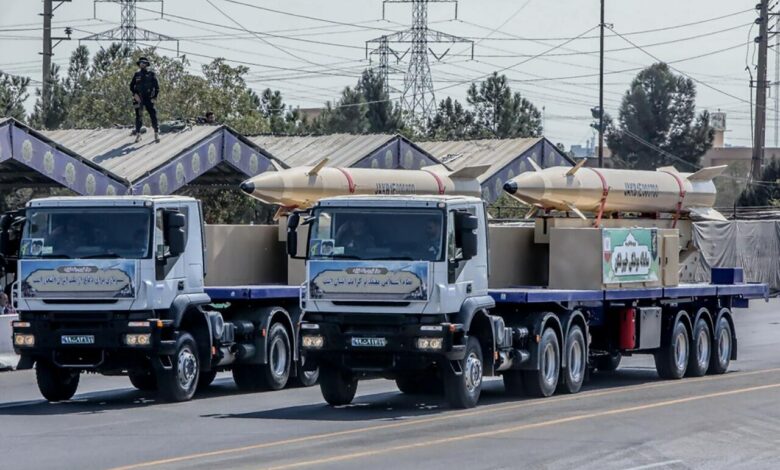
Featured image is archival and for illustration only.
شاهد أيضًا
رابط الفيديو على يوتيوب: انقر هنا (https://www.youtube.com/watch?v=g7Nc74WT0fE)