After the US Midterms: Scenarios for Renewed Strikes on Iran and the Gulf’s Exposure to Retaliation

As the United States approaches its November 3 midterm elections, Gulf capitals are assessing warnings that military operations against Iran could resume. The issue is not simply when a strike might occur, but how Tehran might respond against energy installations, airports and ports, at a time when recent attacks have underscored risks to civilians and international commerce.
Euro Times | In-depth analysis | October 29, 2026
As the United States approaches its November 3 midterm elections, Gulf capitals are assessing warnings that military operations against Iran could resume. The issue is not simply when a strike might occur, but how Tehran might respond against energy installations, airports and ports, at a time when recent attacks have underscored risks to civilians and international commerce.
Diplomatic warnings are not a decision to go to war
The Associated Press reported on October 28, citing diplomats familiar with the discussions, that US officials had urged Middle Eastern governments to prepare for the possibility of renewed strikes on Iran after the elections and retaliatory attacks on infrastructure. The sources stressed that President Donald Trump had made no final decision to launch another operation. The White House did not provide a detailed response to the reported warnings. Presenting a new strike as already decided would therefore go beyond the published evidence.
Military reinforcements and operational options
AP reported that the Pentagon had deployed the aircraft carrier Theodore Roosevelt, amphibious assault vessels and Marines in reinforcements involving approximately 9,000 service members. A US official said the buildup could raise the overall naval presence in the region to more than 20,000 sailors and Marines. Such forces provide options for surveillance, air defense and strikes, but the size of a deployment alone does not reveal a target list or operational timetable.
What would a short campaign mean?
Diplomats cited in the report described discussions of an American campaign lasting only a few days. A planned duration, however, is not a guarantee of how long a confrontation would last. Iran could respond directly or through allied armed groups in Yemen and Iraq, extending fighting to shipping routes and oil facilities. The opening pace of air operations can be much faster than the political process required to contain their consequences.
The Gulf’s dilemma: deterrence and continuity
Pumping stations, refineries, airports and export terminals are particularly sensitive because outages affect both the economy and essential services. The reported US warnings included precautionary measures against potential attacks on energy and infrastructure. For Gulf governments, this places a premium on distributing air-defense assets, protecting critical sites and maintaining operations, without assuming that every country would be a direct participant in a US strike.
Diplomacy has not stopped
Iranian Foreign Minister Abbas Araghchi said on October 28 that Tehran was still giving diplomacy a chance and discussing ideas through intermediaries for restoring a ceasefire. The United Arab Emirates also called for political solutions to contain the escalation. Two tracks therefore coexist: military preparation and warning on one hand, and continuing diplomatic contact on the other. Neither automatically rules out the other.
The domestic American cost
According to AP, the Pentagon provided Congress with a war-cost estimate of $47.1 billion. Fuel prices and household expenses have also entered the American political debate. Yet tying a specific military decision to an election result would require independent evidence. The electoral calendar is plainly part of the public discussion, but that is not proof that a decision to attack has been made because of it.
Indicators to watch
Possible paths include sustained pressure and a blockade without fresh strikes, limited operations against military targets, or a broader confrontation if retaliation escalates. These are analytical scenarios, not announced US plans. The most useful indicators will be formal orders, independently documented force movements, aviation and maritime warnings, and the positions of mediators—not isolated leaks or speculation.
Original sources: Associated Press reporting via News4Jax, October 28, 2026.
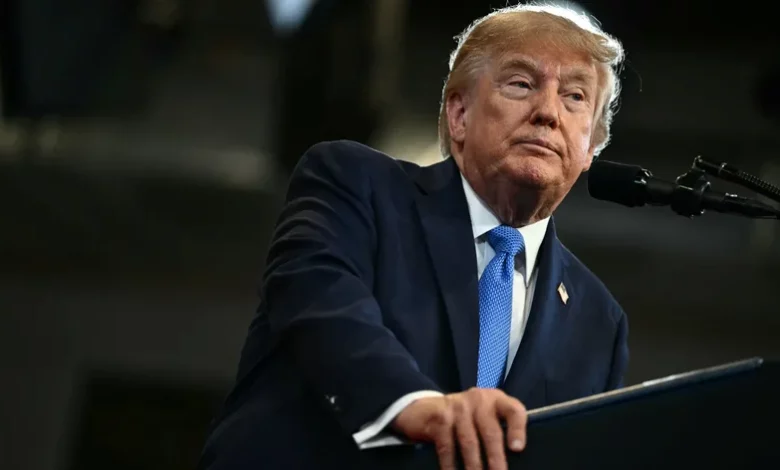
Featured image is archival and for illustration only.
شاهد أيضًا
رابط الفيديو على يوتيوب: انقر هنا (https://www.youtube.com/watch?v=g7Nc74WT0fE)