Iran’s Shadow Fleet Under Siege: How Washington Targets Tankers, Front Companies and Oil Revenue Networks

The US–Iran confrontation at sea increasingly extends beyond intercepting ships to the networks that make oil exports possible: aging tankers, companies registered across jurisdictions, cargo intermediaries and financial facilitators. On October 8, the US Treasury announced another phase of Operation Economic Outcast against what it described as the remnants of Iran’s shadow fleet.
Euro Times | In-depth analysis | October 29, 2026
The US–Iran confrontation at sea increasingly extends beyond intercepting ships to the networks that make oil exports possible: aging tankers, companies registered across jurisdictions, cargo intermediaries and financial facilitators. On October 8, the US Treasury announced another phase of Operation Economic Outcast against what it described as the remnants of Iran’s shadow fleet.
Why target a network rather than a single ship?
The US Treasury says the shadow fleet enables billions of dollars in oil and petroleum products to reach overseas markets despite restrictions. Maritime operations commonly involve a registered owner, management company, commercial operator, shipping broker and insurer, with different parties involved on different voyages. Designating a tanker can therefore affect banking, insurance and port services well beyond the vessel itself.
Operation Economic Outcast
In an official October 8 statement, the Treasury said its measures targeted the remaining Iranian tanker network and supporting companies, claiming that much of the remaining network had been disrupted. This is the US administration’s assessment, not an independent measurement of how much oil export capacity actually stopped operating. The department said the operation had been announced on August 24 and also targeted financing, money-laundering channels and intermediaries facilitating sanctions evasion.
Blockade and sanctions are different instruments
A blockade is a military measure intended to prevent passage or redirect vessels. Sanctions restrict financial and commercial dealings with specified entities. The two can overlap, but a sanctioned ship is not necessarily one that has been intercepted, and a listed company has not necessarily ceased all operations. Keeping these distinctions clear is essential to measuring the results of the US campaign.
How commercial links can be obscured
Layered ownership structures, changes of vessel names and flags, and switches in management companies can complicate efforts to identify who ultimately benefits from a cargo. Past sanctions reporting has described resale through intermediaries and the concealment of oil origin. But every individual allegation requires checking the ship’s IMO number, ownership records, transfer dates and voyage data before concluding that a violation occurred.
Effects beyond Iran
The Treasury has warned that sanctions exposure can extend to non-US people and companies that continue transactions Washington considers supportive of evasion. Banks, insurers and service providers may consequently increase scrutiny even when a ship is not directly listed. Legitimate trade may also face higher compliance costs, delayed payments and additional checks on beneficial ownership.
How to measure the campaign’s impact
The number of tankers designated does not prove that oil exports have collapsed. More useful measures include actual cargo volumes, the number of ships still operating after designation, changing delivery destinations, crude-price discounts and whether insurers and banks continue providing services. Without such evidence, the claim that the network has been neutralized remains an attributed US government position.
A struggle over maritime routes
The sanctions drive is unfolding amid threats to shipping through the Strait of Hormuz and the Gulf of Oman. As restrictions on export routes and financing increase, intermediaries and alternative routes become more important, as does the risk of interdiction incidents involving commercial ships. The oil conflict is therefore a contest over information, finance and insurance as much as a confrontation at sea.
Original sources: US Treasury Department, October 8, 2026.
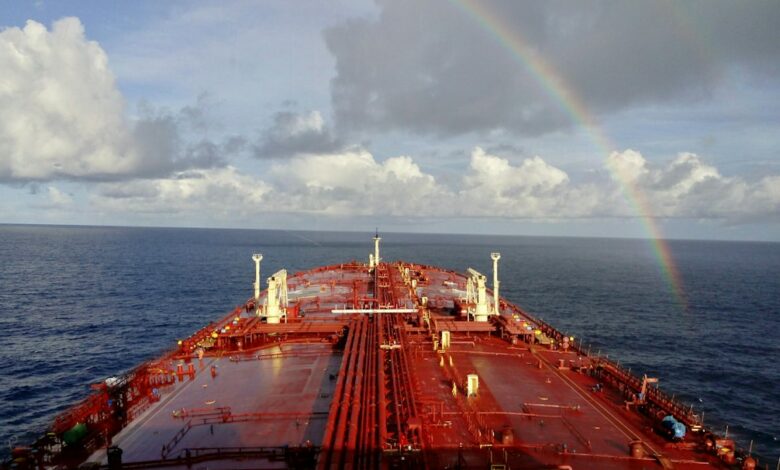
Featured image is archival and for illustration only.
شاهد أيضًا
رابط الفيديو على يوتيوب: انقر هنا (https://www.youtube.com/watch?v=g7Nc74WT0fE)