
Mysterious Radio Antennas in Ahvaz: Is Iran Strengthening Security Communications or Preparing for Electronic Warfare?

An examination of unusual radio antenna arrays reportedly installed in Ahvaz, assessing communications, surveillance and electronic-warfare scenarios while distinguishing evidence from speculation.
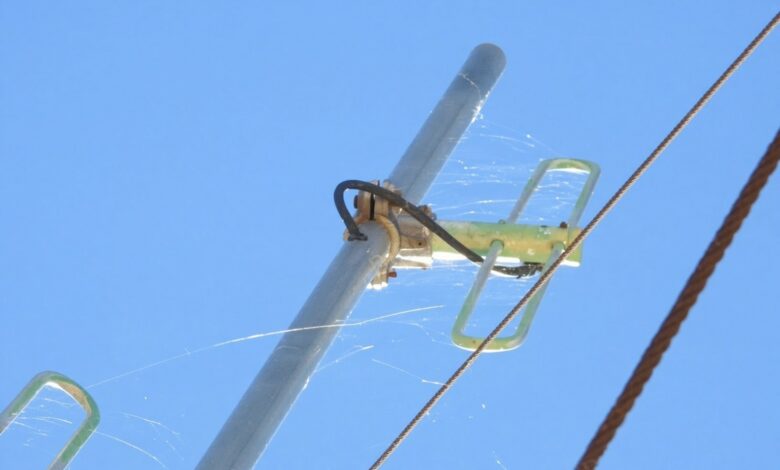
EURO TIMES / Political Desk — Photographs of radio towers reportedly installed by Iranian authorities in Ahvaz, in Iran’s southwestern Khuzestan province, raise questions about the purpose of their unusual antenna arrays. The region borders Iraq, lies near the Gulf and hosts strategically important oil, gas and industrial facilities. The photographs alone cannot establish when the equipment was installed, who operates it or whether it has a military function.
Several explanations are technically plausible: conventional radio communications, a resilient network for security agencies, industrial or emergency communications, signals monitoring, or integration into a wider electronic-warfare system. These possibilities should not be confused with verified findings.
What do the photographs show?
The pictured metal mast carries several vertically arranged antennas connected by cables. Their configuration resembles folded-dipole antennas and multi-element arrays commonly used for VHF/UHF radio transmission and reception. Such equipment can serve repeaters and networks operating independently of mobile-phone and internet infrastructure. Commercial suppliers including Telewave sell comparable antennas for public safety, government, industrial and other communications.
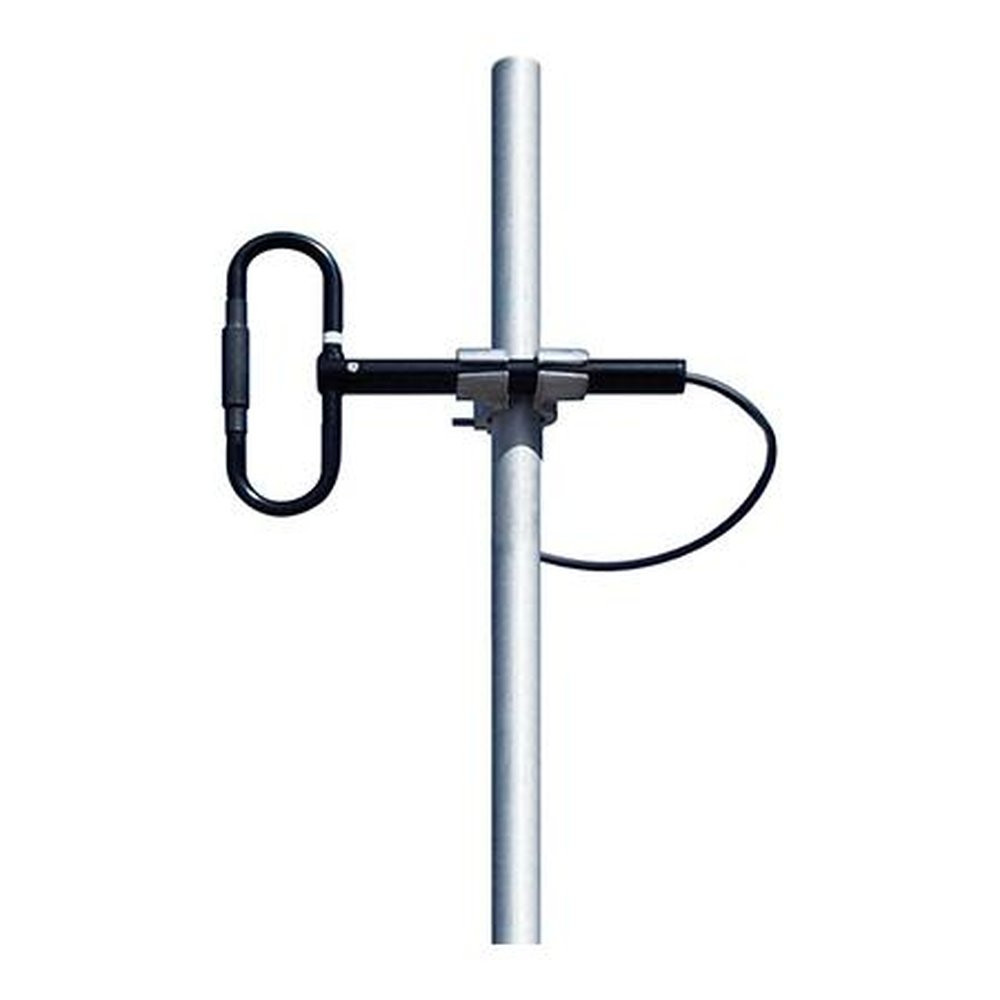
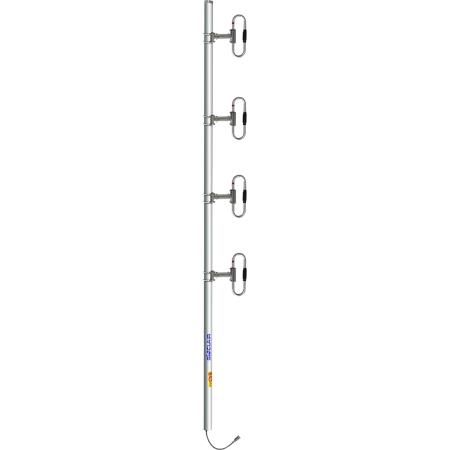
The antennas do not resemble the typical panel arrays used on 4G and 5G cellular towers, although visual similarity is insufficient to determine their precise frequencies, coverage or intended users.
Scenario one: an independent security or military communications network
One possibility is that Iranian authorities are strengthening radio communications for the Revolutionary Guard, Basij, police or other agencies. A dedicated network could link field units to command centres without relying directly on public mobile networks, particularly during emergencies or attacks on civilian infrastructure.
- Maintaining communications when public networks fail or are disrupted.
- Connecting security headquarters with deployed units.
- Coordinating emergency or military responses.
- Providing backup links and extending coverage in border areas.
If similar towers are independently confirmed across multiple locations, they could indicate an expanded network rather than an isolated installation. The images do not establish that such a network exists.
Scenario two: supporting internal security operations
Khuzestan has experienced protests over water shortages, economic grievances and political conditions. Rights organisation ARTICLE 19 has documented Iranian authorities’ use of mobile internet shutdowns during protests.
Independent radio communications could allow security forces to coordinate while public communications are restricted. That does not mean the photographed antennas themselves shut down civilian networks: providing secure communications and deliberately disrupting internet access are different technical functions.
Scenario three: signals intelligence and radio monitoring
The arrays could theoretically be associated with radio monitoring or signals intelligence (SIGINT). Specialised receivers, processors and software can be used to identify transmissions, monitor radio activity or help locate emitters. Proximity to Iraq and sensitive energy facilities makes this scenario strategically relevant.
However, an antenna by itself does not prove interception or surveillance. Establishing that role would require information about the connected receivers, signal-processing equipment and actual operating frequencies.
Scenario four: electronic-warfare preparations
Radio infrastructure can form part of broader electronic-warfare arrangements, including surveillance, communications protection and interference. Amid regional military tensions, the timing of any new installation could be significant — but the installation date has not been independently verified.
Crucially, an antenna is not automatically a jammer. Active jamming requires appropriate transmitters and other specialised equipment. Based on the images alone, routine communications or signal relay is a more directly supported explanation than an operational electronic-warfare capability.
Could the antennas target Starlink, GPS or drones?

Iran has sought to restrict alternative communications methods, while Euronews reported in May 2026 on Iranians travelling towards the Iraqi border to obtain alternative connectivity during an internet blackout.
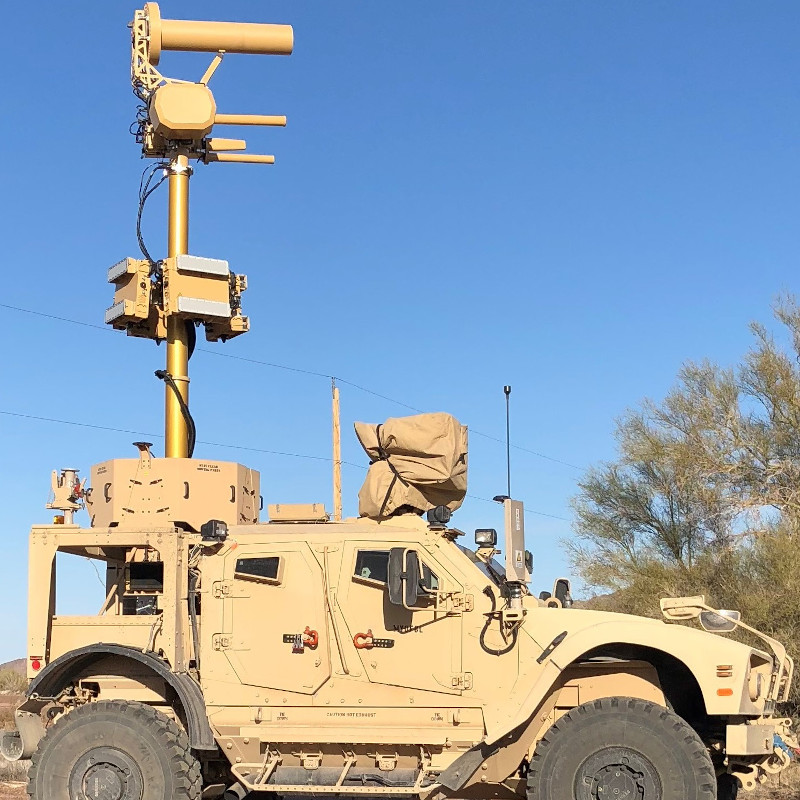
Nevertheless, nothing visible in these photographs demonstrates equipment specifically designed to jam Starlink terminals, interfere with satellite navigation or disable unmanned aircraft. Those tasks typically depend on distinct frequency bands, dedicated hardware and system integration. Claims of such capabilities would require separate evidence.
Scenario five: protecting energy installations and border infrastructure
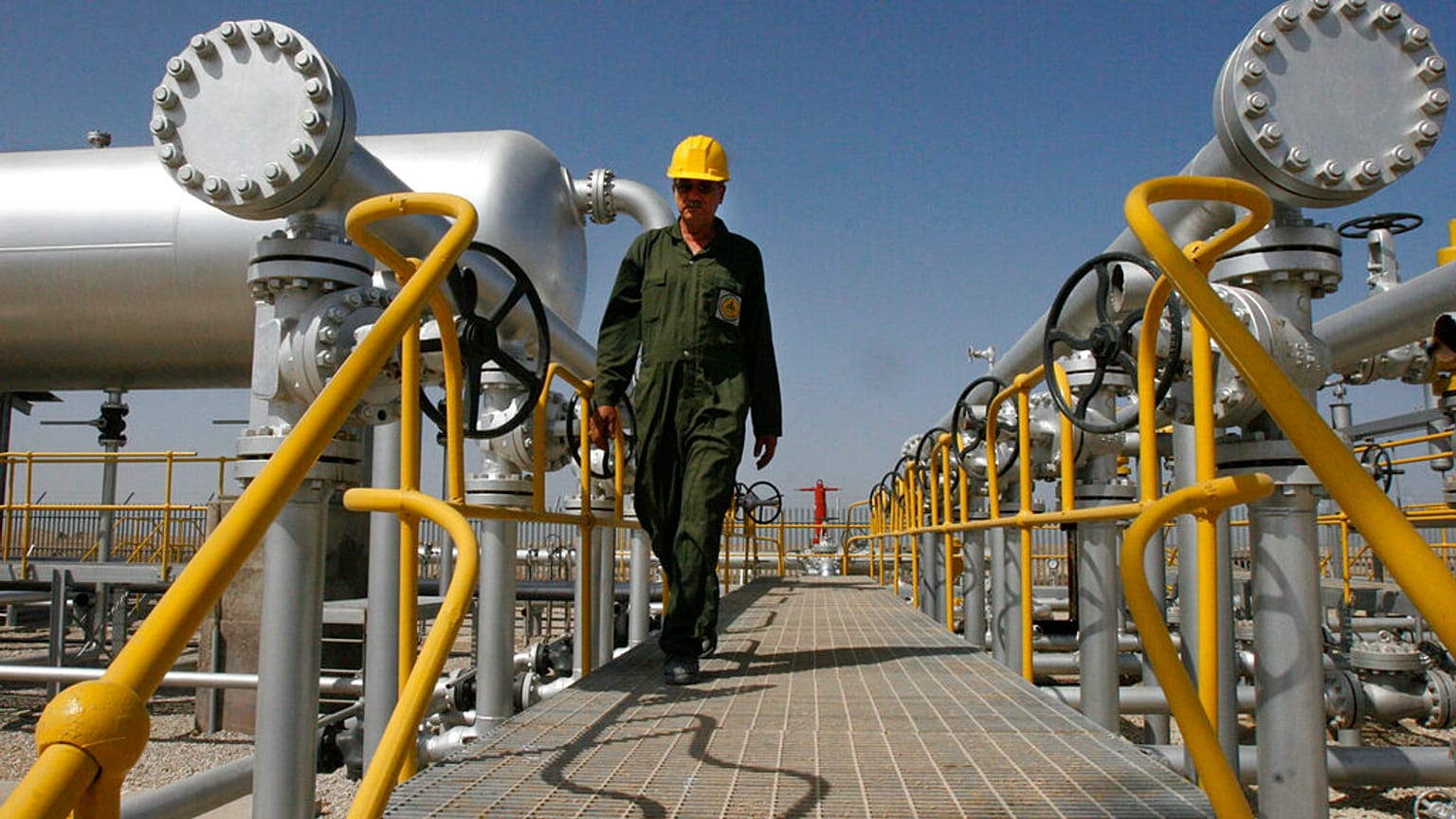

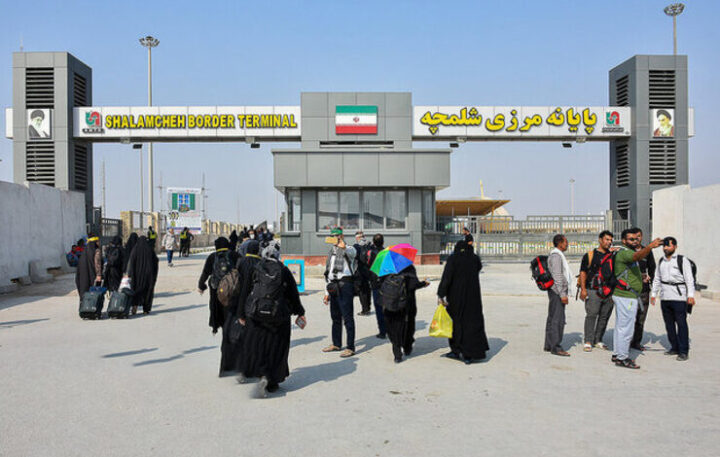
The Ahvaz area is central to Iran’s energy industry. Wood Mackenzie describes the Ahvaz field as Iran’s largest oil field. Radio links could therefore support site protection, border operations, industrial communications or emergency services, including when ordinary infrastructure is damaged.
This civilian and industrial explanation is important: the presence of specialised radio antennas does not in itself indicate military ownership.
Assessment of the possible functions
| Possible purpose | Assessment based on photographs |
|---|---|
| Radio communications and signal relay | Relatively well supported by visible design |
| Independent military/security communications | Plausible, ownership unverified |
| Maintaining security communications during shutdowns | Plausible, unverified |
| Industrial, emergency and energy-site communications | Plausible |
| Signals intelligence and interception | Possible, not established |
| Electronic jamming or warfare | Not established |
| Starlink/GPS jamming or counter-drone operations | Insufficient evidence |
What is Tehran planning?
The decisive questions are who operates the antennas, when they were installed, how widely they are deployed and what equipment is connected to them. If an extensive new network is confirmed alongside other security deployments, it might indicate an effort to strengthen communications resilience against external attacks or domestic unrest. Equally, the towers may serve ordinary industrial, emergency or government radio users.
The most defensible conclusion is therefore limited: the photographs are consistent with specialised radio communications equipment, but they do not independently demonstrate surveillance, electronic warfare or an imminent military operation.
Editorial note: The comparative photographs in this article are illustrative or archival and do not document the installation under examination. EURO TIMES could not independently verify its installation date or operator. This is an analytical assessment, not a confirmed account of the system’s purpose. Original report: EURO TIMES (Arabic).