
“Damn, That’s Tehran!” B-2 Pilots Reveal the Secrets of the 37-Hour US Strike on Iran’s Fordow

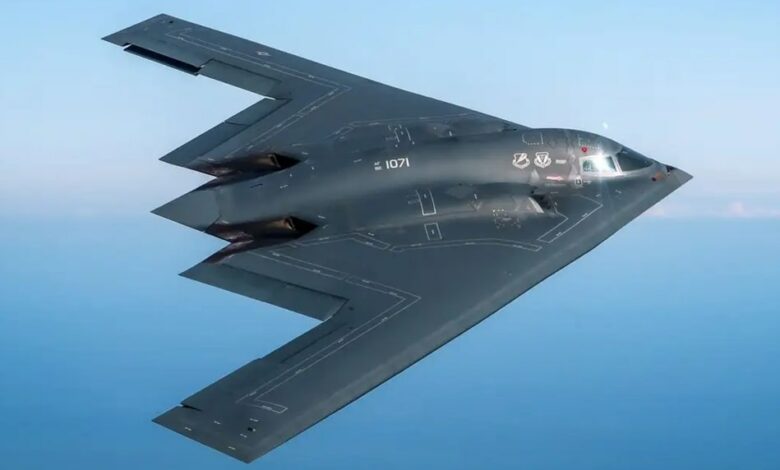
B-2 pilots recount the 37-hour Operation Midnight Hammer mission against Iran’s Fordow, Natanz and Isfahan nuclear sites, revealing years of planning and a massive deception effort.
EURO TIMES — American aircrews who took part in the June 2025 strikes on Iranian nuclear facilities have described the final moments before dropping massive bunker-busting bombs on Fordow. Their accounts reveal a highly secretive mission involving approximately 37 hours in the air and support from around 125 US aircraft.
The new details come from an investigation published by Air & Space Forces Magazine on November 18, 2026, based on interviews with B-2 crews, including those assigned to diversionary flights. Iran International reported the accounts in Arabic on November 19.
“Damn, that’s Tehran!”
After roughly 18 hours in the air, the crew of one bomber spotted the lights of a vast city emerging from the darkness as they approached their targets. One pilot identified the Iranian capital and expressed his astonishment. The reality of the mission was now unmistakable.
At the appointed moment, the weapons bay opened and two approximately 30,000-pound bunker-busting bombs were released toward the deeply buried Fordow facility. The crew felt the aircraft’s handling change as it shed the heavy payload. One pilot wanted to leave immediately; the other asked to watch the impact. Seconds later, they witnessed a flash and a fireball that, by their description, rose to the height of a ten-story building.
Fifteen years of planning
Planning did not begin with the immediate crisis. US officials had studied options for attacking Fordow since construction of the mountain complex came to light in 2009. Satellite imagery raised intelligence concerns, and President Barack Obama publicly disclosed the facility that year.
A former bomber pilot identified in the investigation by the pseudonym “Matthew” continued working on the problem after retirement with the US Defense Threat Reduction Agency. His team examined the underground facility’s depth, ventilation routes, internal systems and other characteristics while the United States developed the GBU-57 Massive Ordnance Penetrator.
Planners assessed how to exploit vulnerable features, including ventilation shafts, and how to determine the timing and depth of the weapons’ detonations. The plans and munitions were tested and revised repeatedly. The June 2025 mission marked the bomb’s first combat use.
Last-minute changes
Israel’s strikes beginning on June 13, 2025, changed assessments of Iranian air defenses and prompted revisions to the mission. A planner referred to as “Oscar” said some adjustments were ordered even after pilots had gone to bed ahead of the long flight.
US Joint Chiefs Chairman General Dan Caine described Iranian efforts to cover parts of Fordow with concrete before the attack. Planning extended beyond the targets to routes, aerial refueling, air-defense threats, possible crew rescue operations and potential Iranian retaliation against American bases.
A strategic deception
The departure of seven stealth bombers from Whiteman Air Force Base in Missouri would be difficult to conceal. To divert attention, other bombers flew visibly westward, suggesting a possible Pacific deployment, while the main strike group headed east across the Atlantic and Mediterranean toward the Middle East.
The seven strike aircraft took off around midnight on June 21. Fourteen pilots participated, split between active-duty Air Force personnel and Missouri Air National Guard members. Crews maintained extensive radio silence to protect the operation.
Thirty-seven hours in a cramped cockpit
The B-2 has two side-by-side seats and limited space behind them for resting. Pilots alternated short naps, generally lasting 30 to 45 minutes, with checklists, weapon preparations and repeated refueling. They carried coffee, water, sandwiches, sweets and dried meat, and some described the air in the cockpit as extremely dry.
One crew recalled a moment near the Strait of Gibraltar when a life jacket caught on a seat and unexpectedly inflated, briefly providing comic relief. Several pilots concealed their true destination from their families; some described the departure as a training flight.
Seven bombers, three nuclear sites
According to the published accounts, six B-2 bombers struck Fordow and a seventh attacked Natanz. On the same night, US submarine-launched Tomahawk missiles targeted facilities in Isfahan. The bombers dropped a total of 14 Massive Ordnance Penetrator bombs.
Supporting forces included F-22, F-35, F-16 and A-10 aircraft, KC-135 and KC-46 tankers, and communications and surveillance platforms. Approximately 125 aircraft supported the overall operation.
American post-strike accounts indicated that Iranian air defenses did not fire at the B-2 bombers during the attacks. Some pilots nevertheless reported warnings while departing Iranian airspace, raising fears of being targeted.
What did the strikes achieve?
The magazine reports that subsequent American assessments concluded the strikes significantly damaged Iran’s ability to enrich nuclear material to weapons-grade levels. However, the precise extent of the damage remains incompletely established.
David Albright, president of the Institute for Science and International Security and a former UN weapons inspector, assessed that Iran’s centrifuge program had been hit severely and could take years to rebuild to its previous level. That remains an expert assessment, not independent verification of every affected facility.
The operation’s name was revealed after the return
President Donald Trump announced the attack while the bombers were returning to the United States. Some pilots learned that the news had gone global from tanker crews during refueling. Family members heard about the strikes on television or in public places.
After landing at Whiteman, the crews briefly met their families before being taken to a secure facility for medical checks and reviews of intelligence and satellite imagery. Some said they only then learned the operation’s official name: Operation Midnight Hammer.
These first-person accounts offer rare insight into the American crews’ experience, but they are the participants’ version of events and do not independently settle the full military consequences or current condition of Iran’s nuclear facilities.