Iran probes disappearance of $1.6bn in oil revenue through secret sanctions-evasion network

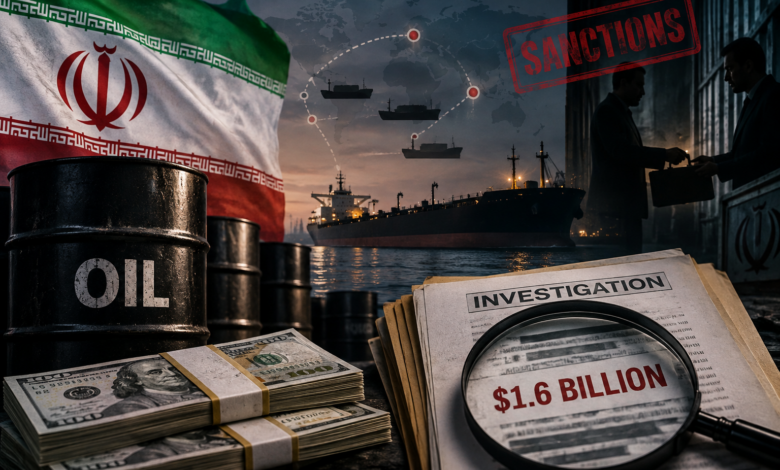
Euro Times — Iranian authorities are investigating allegations that at least $1.6 billion in oil revenue was not returned to the state after funds passed through a network of intermediaries used by Tehran to collect export earnings outside the sanctions-constrained international financial system.
According to a Newsmax report, the case has renewed scrutiny of the complex financial mechanisms Iran has built during years of sanctions, particularly its reliance on companies and individuals acting as trusted intermediaries to receive oil-sale proceeds abroad and move the money outside conventional banking channels.
These intermediaries are often described as “trustees” or “trusties”. Their role is to receive proceeds from Iranian oil and other exports and transfer or deploy the funds on Iran’s behalf when sanctioned Iranian banks cannot operate normally through the global financial system.
But the mechanism designed to help Tehran circumvent sanctions has itself become a source of major losses, according to the allegations, with several intermediaries accused of failing to return money entrusted to them.
59 criminal cases and 15 fugitives
The report cited earlier information that senior Iranian officials had acknowledged allegations involving at least $1.6 billion, with some suspects leaving Iran.
Zabihollah Khodaeian, head of Iran’s General Inspection Organization, told state television that one intermediary alone failed to return about $200 million before leaving the country.
Iranian authorities have opened 59 criminal cases involving managers of companies operating within the trustee system, while prosecutors have sought Interpol red notices for 15 fugitives, according to the report.
The affair has triggered questions among Iranian business figures over who selected and guaranteed individuals and companies entrusted with such large sums, and what oversight mechanisms were in place.
Majid Reza Hariri, head of the Iran-China Chamber of Commerce, questioned who had introduced and guaranteed the trustees and why those behind them were not being held accountable. He also spoke more broadly of intermediaries fleeing with “billions of dollars” in national wealth — a wider claim than the specific $1.6 billion covered by the known investigations.
Why Iran relies on intermediaries
The system grew out of sanctions that sharply restricted Iranian banks’ access to the international financial system. Tehran consequently expanded its use of intermediaries, front companies and overseas financial channels to sell oil and collect proceeds without routing payments directly through sanctioned Iranian institutions.
The US Treasury has repeatedly described networks of front companies, intermediaries, shipping firms and financial channels that allow Iran to continue generating export revenue despite sanctions.
China remains the most important market for Iranian crude. Separate US data have estimated undeclared Iranian crude exports to China at roughly $31.2 billion in 2025, with purchases estimated at about 1.4 million barrels per day that year.
Washington targets the financial networks
The Newsmax report also cited US Treasury Secretary Scott Bessent’s pledge to keep increasing pressure on Iranian oil sales in an effort to reduce resources available to the Iranian government and armed forces.
Bessent said in May that the Treasury would continue targeting Iranian oil sales and revenue channels, as Washington seeks to prevent Tehran from using those funds to rebuild military capabilities.
$1.6 billion may not be the final figure
The $1.6 billion figure refers to funds covered by the publicly known allegations and investigations and should not be treated as a final accounting of all money potentially missing from the wider intermediary system.
Other reports have put unrepatriated revenues associated with oil, steel, petrochemicals and other Iranian exports at more than $11 billion. That broader estimate is separate from the specific $1.6 billion case and the two figures should not be conflated.
Intermediary accused over more than €300 million
In August, authorities arrested an alleged intermediary accused of bank debts exceeding €300 million, equivalent to roughly $350 million. Khodaeian has described the conduct of some intermediaries as a “betrayal” of the country.
The paradox of sanctions evasion
The affair exposes a central vulnerability in Tehran’s sanctions-evasion architecture. The same network that enables Iran to keep selling oil and other goods despite Western financial restrictions also places large sums in the hands of companies and individuals operating outside normal banking channels, making conventional oversight more difficult.
The issue carries added significance because China is Iran’s principal crude market, while Iranian trade has increasingly relied on intermediary companies, alternative settlement arrangements and yuan-based channels to reduce exposure to the dollar-based financial system.
Read also:
Washington expands financial war on Iran as global banks receive intelligence on Tehran networks
WSJ: Iran’s bid to bypass Hormuz blockade by land runs into border and cost bottlenecks