Secret Documents and Leaked Recordings on Iran’s Crackdown Plan… Opposition Reveals the Inner Workings of the “Thar Allah” Headquarters and the Role of Foreign Militias

Euro Times / Washington
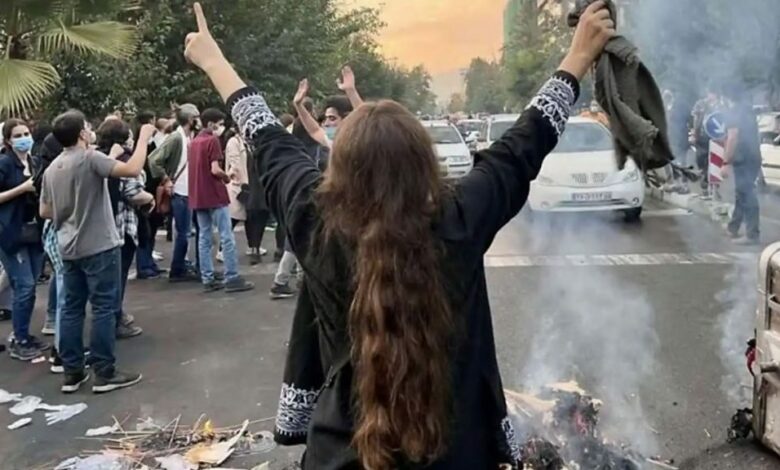
Secret documents and internal security reports allegedly obtained from within Iran’s ruling system reveal what the Iranian opposition describes as a comprehensive “crackdown plan” ordered directly by Supreme Leader Ali Khamenei during the January 2026 uprising, including escalation to “armed security” measures and the authorization of live ammunition against protesters.
The Iranian opposition stated that these materials include classified telegrams, high-level meeting summaries, a leaked audio recording from Tehran’s provincial security council, and a detailed file attributed to the “Thar Allah” headquarters — which it describes as the central command structure behind the suppression of mass protests.
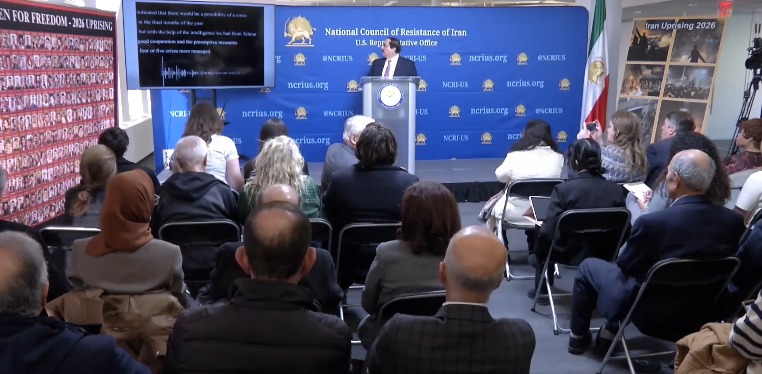
These disclosures were presented during a press conference held by the National Council of Resistance of Iran (NCRI) representation in the United States on Tuesday, February 3, 2026, in Washington, attended by journalists, researchers, and diplomatic figures.
A Classified Security Framework: The IRGC as Final Authority
According to Alireza Jafarzadeh, deputy director of the NCRI office in Washington, one of the key documents dates back to March 3, 2021, issued by Iran’s Supreme National Security Council. The document reportedly establishes a four-level classification system for unrest, ranging from “public order status” to “armed security status.”
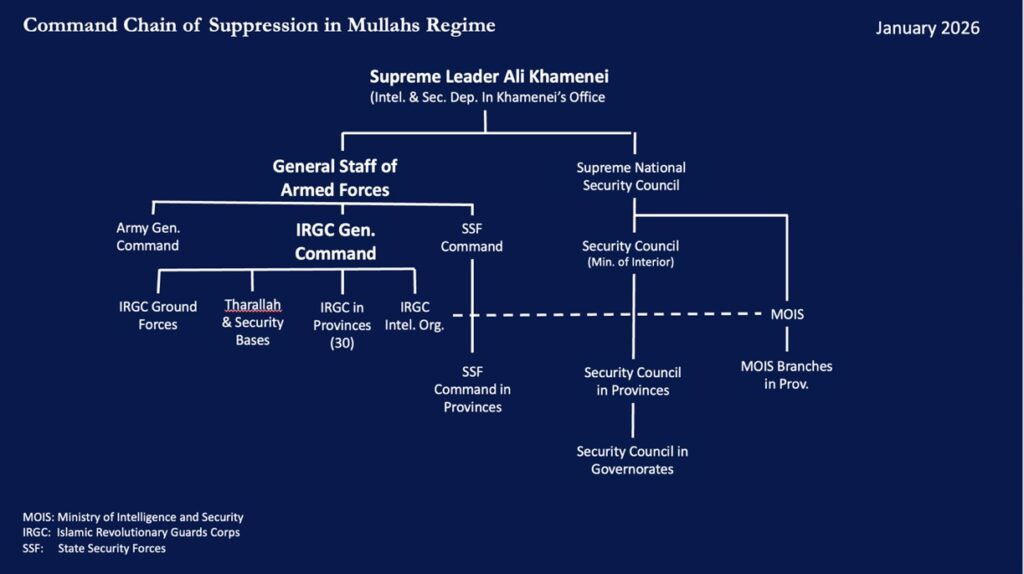
The opposition claims the document grants the Islamic Revolutionary Guard Corps (IRGC) full command authority in both “unarmed security” and “armed security” phases, placing police forces and the Ministry of Intelligence under its operational control.
Based on this structure, the opposition argues that once protests in late December 2025 expanded into a nationwide uprising, field leadership was quickly transferred from internal security forces to the IRGC, effectively activating the “armed security” level and enabling lethal force.
Leaked Audio Recording Shows the Regime Expected an Uprising
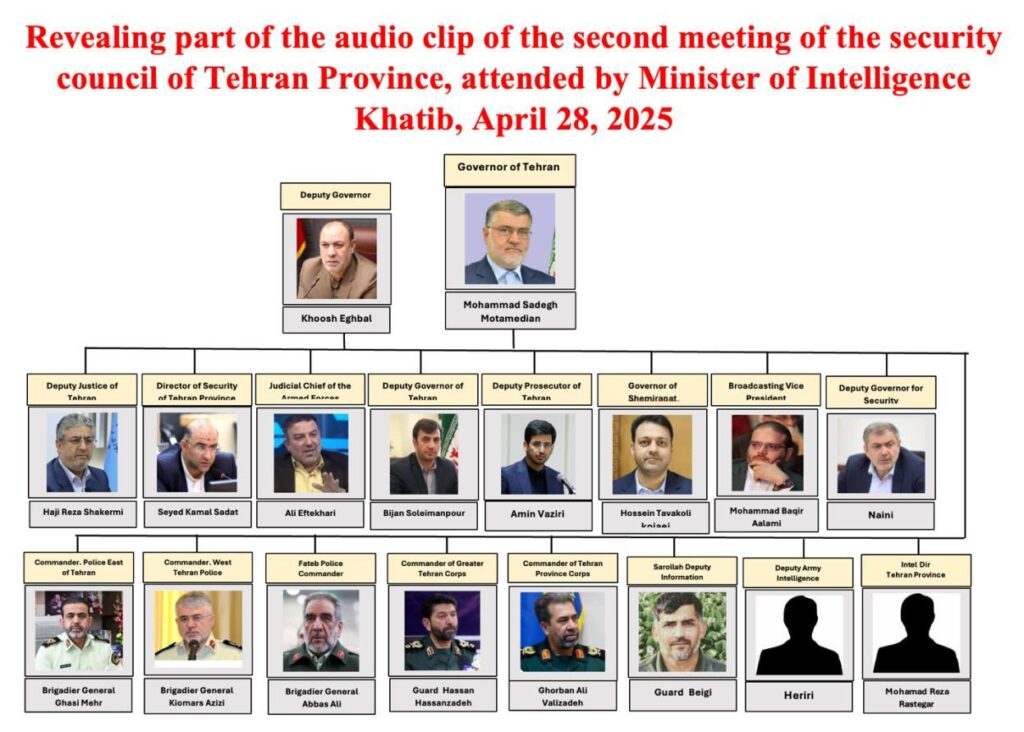
Among the most notable revelations was an audio recording from a Tehran provincial security council meeting held on April 28, 2025, attended by Intelligence Minister Esmail Khatib, Tehran’s governor, and senior IRGC, police, and judiciary officials.
According to excerpts presented at the conference, officials focused heavily on scenarios of “social unrest,” “street explosions,” and the likelihood of major protests by the end of the year, praising coordination between the IRGC, the Intelligence Ministry, and the “Thar Allah” command.
The opposition argued that the recording demonstrates the January 2026 uprising was not unexpected, but rather anticipated and met with pre-planned repression.
The “Thar Allah” File: Surveillance, Target Lists, and Total Control
The opposition also presented what it described as a secret 129-page file attributed to Tehran’s “Thar Allah” headquarters, which it called one of the regime’s most important national repression centers due to its responsibility over Tehran and Alborz province.
The document reportedly outlines a plan titled “Control and Management of High-Risk Social Groups,” identifying Iran’s primary enemies as members and supporters of the Mujahedin-e Khalq (MEK) and families of political prisoners and victims.
According to the opposition, the plan includes measures such as:
Monitoring phone communications and online activity
Hacking mobile devices and email accounts
Tracking travel movements and bank records
Installing listening devices in homes and workplaces
Recruiting informants from within families and work environments
Leadership Charts Allegedly Reveal the Chain of Command
Jafarzadeh further claimed that organizational charts obtained by the opposition expose the full command network behind the repression, with all lines ultimately leading to Khamenei’s office, overseeing a joint operational structure involving the IRGC and the Intelligence Ministry.
The opposition also highlighted the composition of Tehran’s provincial security council, which gathered senior military commanders, judges, and intelligence leaders, as evidence of coordinated planning between security and judicial institutions.
Three Phases of Suppression: From Police to “Armed Security”
The opposition described the crackdown as unfolding in three stages:
December 28–30: Treated as a “public order” situation under police authority
Expansion phase: Shift to “unarmed security” led by the IRGC
From January 8 onward: Transition to “armed security,” with live ammunition, shotgun pellets, and nationwide internet shutdowns
The opposition claims thousands of protesters were killed within days, and arrests exceeded 50,000.
Foreign Militias Involved in the Crackdown
One of the most serious allegations presented was that Iranian authorities relied not only on domestic forces, but also on foreign militias loyal to Tehran, including fighters from Iraq’s Popular Mobilization Forces, Afghanistan’s Fatemiyoun brigade, Lebanon’s Hezbollah, Yemen’s Houthis, and Pakistan’s Zaynabiyoun units.
According to the opposition, these elements participated in suppression efforts in key regions such as Ahvaz, Sanandaj, and Kermanshah.
Opposition Presents a Roadmap for the “Day After”
During the conference, NCRI representative Sona Samsami linked the disclosures to Iran’s political future, describing the uprising as a historic turning point and asserting that the regime’s collapse is only a matter of time.
She stated that the NCRI has prepared a transition roadmap involving an interim government, free elections for a constituent assembly within six months, and a democratic constitution based on secularism, gender equality, abolition of the death penalty, and a non-nuclear republic.
A Regime of Repression Versus an Organized Alternative
The Iranian opposition concluded that the January 2026 uprising represents a confrontation between a system allegedly designed for systematic repression under Khamenei’s direct supervision, and a society seeking democratic change through an organized political alternative.