Iraq: Intelligence sources say Houthi presence has expanded across 8 provinces, with drone and missile activity

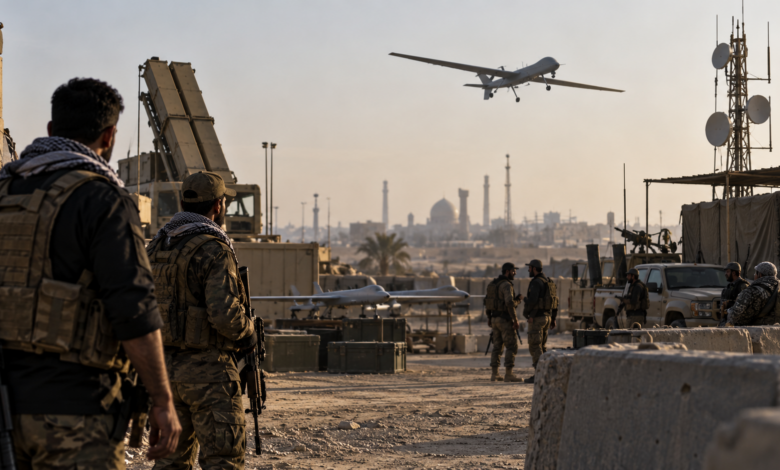
Iraqi intelligence sources say the Houthis have expanded their presence across eight provinces through offices and shared sites with Iran-aligned factions, with activity linked to drones and missiles and a security presence in Jurf al-Sakhar.
Euro Times – Baghdad
Iraqi intelligence sources have reported a significant expansion of the Yemeni Houthi movement’s presence inside Iraq in recent years, pointing to a network of offices, shared coordination sites with Iran-aligned armed factions, and activities linked to the development and use of drones and missiles.
According to a report by Alhurra, citing Iraqi intelligence sources familiar with the file, the Houthi presence now extends in different forms across eight provinces: Baghdad, Karbala, Najaf, Maysan, Muthanna, Wasit, Babil and Diyala.
The sources said this does not mean the Houthis operate large, independent camps in all eight provinces. Instead, the presence takes several forms, including religious, social and economic offices as well as headquarters and coordination sites used jointly with Iraqi armed factions.
Jurf al-Sakhar at the center of the security presence
The most sensitive part of the Houthi presence is said to be concentrated in Jurf al-Sakhar in Babil province, south of Baghdad, an area where Kataib Hezbollah has long maintained strong influence.
The sources said the Houthis do not operate large independent camps there, but instead rely on facilities and headquarters shared with Iraqi factions, making it difficult to measure their presence separately.
They also reported the presence of individuals linked to the group in areas closer to Iraq’s border with Saudi Arabia.
Drones, missiles and explosives
According to the intelligence sources cited by Alhurra, personnel and specialists linked to the Houthis are involved in activities related to drones, missiles and explosive devices in coordination with Iraqi armed factions.
The sources also said Iran’s Islamic Revolutionary Guard Corps and Lebanon’s Hezbollah play a role in organizing aspects of that cooperation.
The report did not provide a figure for the number of Houthi operatives or specialists in Iraq, nor did it estimate the scale of facilities or weapons associated with these activities. Alhurra said it could not independently verify all details of the reported deployment.
Earlier reports of operations launched from Iraq
Important parts of the account overlap with a Reuters report published on July 30, which cited regional officials and assessments saying Houthis had participated in attacks on Saudi Arabia launched from Iraqi territory in coordination with Iran-aligned Iraqi armed groups.
Reuters reported that the attacks included targets and oil facilities in eastern Saudi Arabia. At the time, the Iraqi government said it was investigating the allegations.
The agency also noted that cooperation between the Houthis and Iraqi factions is not new. In 2024, Houthi leader Abdul Malik al-Houthi publicly referred to a joint operations room with Iraqi factions, followed later by announcements of joint operations targeting Israel.
Read also: Iraq Strike Hits Saudi Arabia’s Escape Route From Hormuz as Oil Pipeline Crisis Deepens
Reports of an operations hub in Jurf al-Sakhar
The Critical Threats Project, working with the Institute for the Study of War, previously cited reports that the Houthis had established an operations presence in Jurf al-Sakhar to coordinate military activity with Iran-backed Iraqi factions.
The report also referred to a Houthi presence in Baghdad and noted Jurf al-Sakhar’s importance as a major area of Kataib Hezbollah influence.
These reports do not independently confirm every detail in the latest intelligence claims, but they show that accounts of an organized Houthi presence inside Iraq and coordination with local factions have appeared in multiple sources in recent months.
Houthi figures killed inside Iraq
Among the indicators cited in reporting on the issue are the deaths of Houthi-linked figures in strikes targeting armed-faction sites inside Iraq.
In 2024, Houthi figure Hussein Abdullah Mastour al-Shaabal was reported killed in a strike on a Kataib Hezbollah site in Jurf al-Sakhar. Later reports described him as a specialist in drone operations.
In July 2026, reports also said another Houthi figure, identified as Mohammed Khaled al-Ayashi, was killed alongside members of Iran’s Revolutionary Guard and Iraqi fighters during strikes on sites inside Iraq.
A security expert quoted by Alhurra said the repeated deaths of Houthi figures on Iraqi soil indicate a level of cooperation that goes beyond political contacts or a representative office.
Why Iraq matters
Iraq’s geography gives it particular significance for possible drone or missile operations. The country shares a long border with Saudi Arabia and has large desert areas and sparsely populated zones where monitoring all movement can be difficult.
Analysts say the use of Iraqi territory could allow armed groups to launch drones or conduct operations from directions different from Yemen, complicating efforts to identify the origin of an attack in its early stages.
Iraq’s importance has also grown as the regional network of Iran-aligned groups has changed in recent years, encouraging more direct cooperation among some factions rather than relying solely on separate coordination with Tehran.
Political and social activity alongside the security dimension
The reported Houthi presence is not limited to military activity. The intelligence sources described religious, social and economic offices in several provinces, alongside a representative presence in Baghdad and publicly reported meetings with Iraqi political forces and armed factions.
At the same time, Yemen’s internationally recognized government maintains its official embassy in Baghdad.
The precise number of Houthis in Iraq and the exact scale of their distribution remain unknown, and Iraqi authorities have not publicly confirmed in detail the reported presence across all eight provinces.
Still, the latest intelligence claims, combined with Reuters reporting and earlier security and research assessments, point to increasingly structured links between the Houthis and some Iraqi factions, with Iraq emerging as an important arena for coordination involving drones, missiles and cross-border operations.