US $10 billion plan aims to redraw Gulf oil routes and reduce reliance on Strait of Hormuz

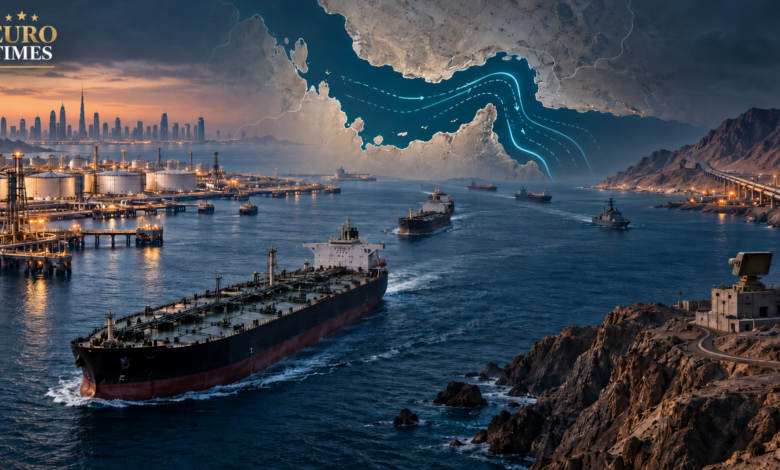
Washington is proposing a $10 billion regional fund to rebuild damaged energy infrastructure and develop safer oil and gas export routes that reduce reliance on the Strait of Hormuz.
Euro Times – Washington
The Trump administration has proposed creating an investment fund worth up to $10 billion to rebuild energy infrastructure damaged during the war with Iran and support new projects and routes that would reduce Gulf states’ dependence on the Strait of Hormuz for oil and gas exports.
The Wall Street Journal, citing U.S. and Middle Eastern officials and documents it reviewed, reported that Washington is proposing to put $5 billion into the fund and seek another $5 billion collectively from eight countries in the region.
The countries Washington hopes to involve are Saudi Arabia, the United Arab Emirates, Qatar, Bahrain, Kuwait, Oman, Iraq and Jordan, bringing the proposed fund to a total of $10 billion.
PACT to rebuild the energy sector
The proposed initiative is called the Partnership for Allied Trust and Construction (PACT). Under the U.S. proposal, it would be managed by the U.S. International Development Finance Corporation, or DFC, a federal agency that works with the private sector on projects that can also advance U.S. foreign-policy and national-security objectives.
Discussions over the fund are still under way and its terms could change. It is also not yet clear whether all eight countries will agree to participate. The project therefore remains a U.S. proposal under negotiation rather than a finalized agreement.
Beyond Hormuz
The plan goes beyond repairing refineries, pipelines and other damaged facilities. It also seeks to encourage the construction and expansion of alternative oil and gas export routes that bypass the Strait of Hormuz, which has become one of the most critical chokepoints in global energy markets during the war.
Oil producers across the Gulf, from the UAE to Iraq, are accelerating efforts to develop alternative routes. Saudi Arabia has now restarted its East-West pipeline linking producing regions to the Red Sea port of Yanbu, one of the most important existing routes capable of bypassing Hormuz.
Researchers and officials cited by the Journal said the war has strengthened the view in Gulf states and Iraq that shipping conditions in the strait may not quickly return to their pre-war state, increasing the push for safer and more reliable export corridors.
Damage running into tens of billions
The proposal comes after refineries, oil fields, gas-export facilities and pipelines across the region suffered damage during the war. Analysts and officials estimate that repairing the region’s energy infrastructure could cost tens of billions of dollars.
At the same time, disruption in Hormuz, longer voyages and ship-to-ship oil transfers have increased pressure on the global tanker fleet and raised freight costs, while risks have also extended into the Red Sea amid continuing Houthi threats and attacks.
Questions over timing
The proposal is nevertheless facing questions in the region. The Wall Street Journal cited Middle Eastern officials who expressed reservations about committing large sums to rebuilding energy facilities without a peace agreement with Tehran, given the possibility that repaired or newly built infrastructure could again come under attack.
Gulf states also have very different capacities to bypass Hormuz. Saudi Arabia and the UAE have greater options for developing alternative export routes, while countries such as Kuwait and Qatar remain much more geographically dependent on the strait.
If PACT moves from negotiations to implementation, it could represent a strategic shift that goes beyond repairing wartime damage and begins reshaping the Gulf’s energy-export map while reducing the Strait of Hormuz’s decisive role in regional exports.